 Wingware
Using Wing with Copilot

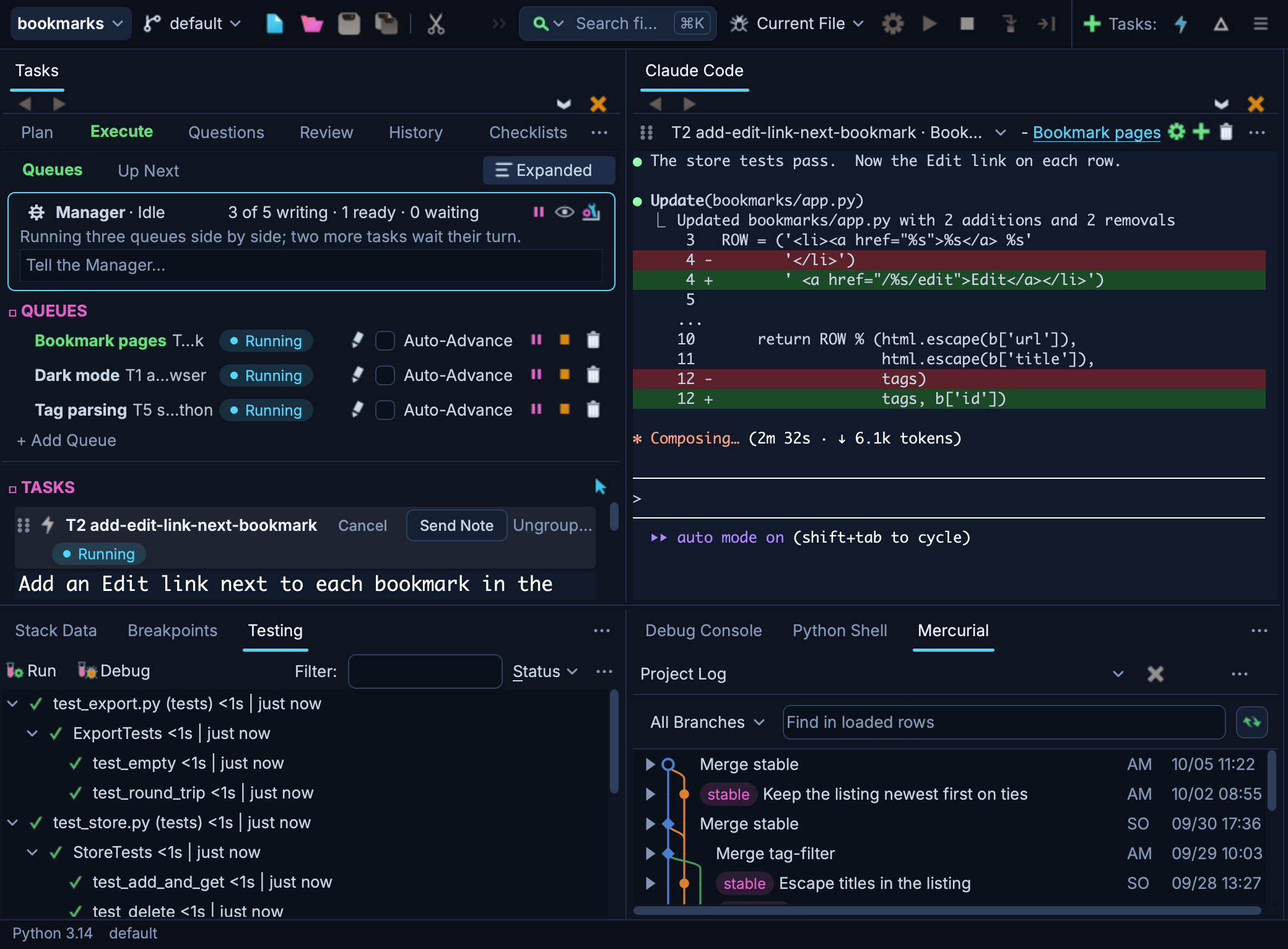
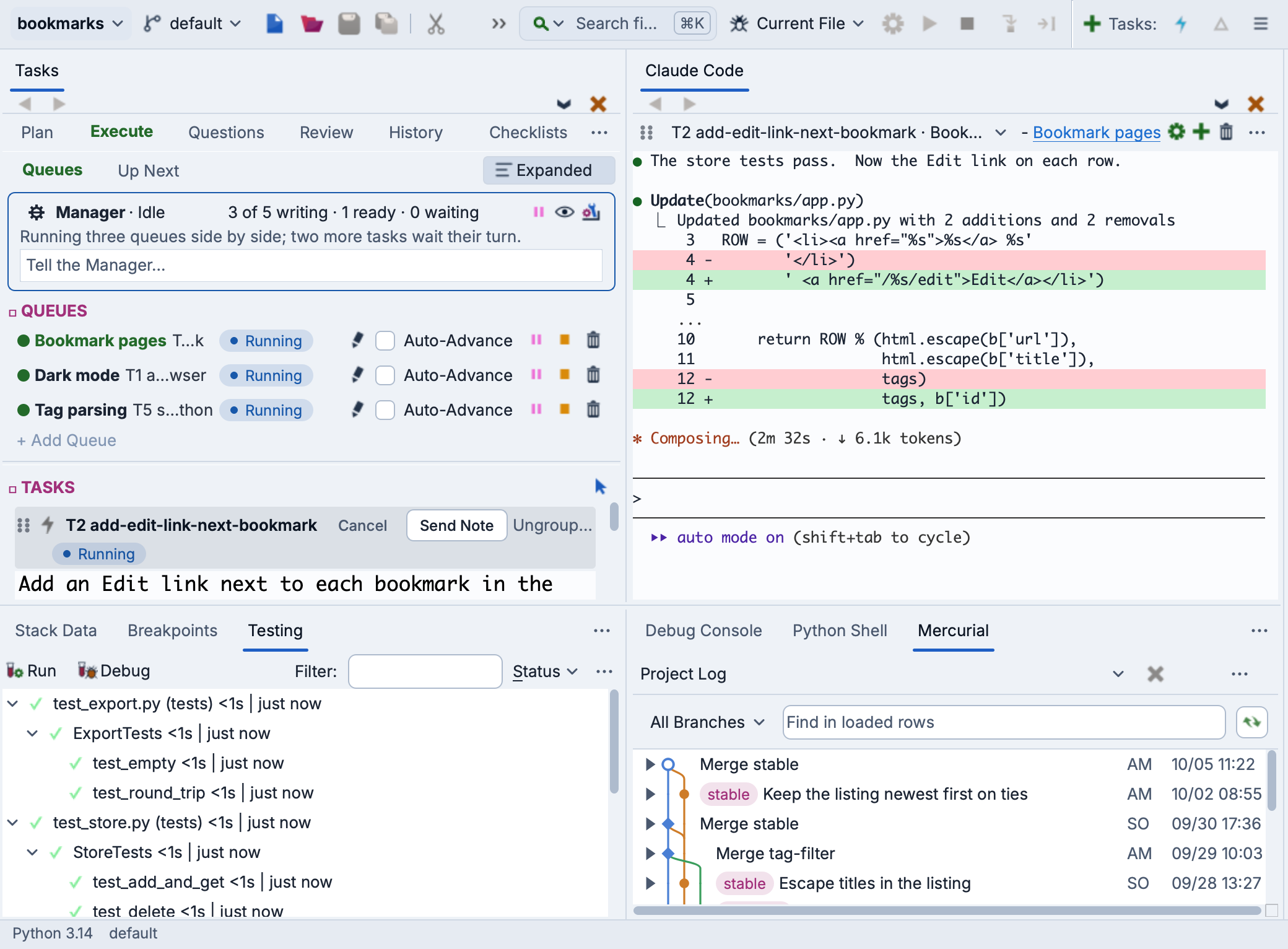
Wing Pro 12 integrates Copilot, GitHub's AI coding agent with the IDE. You can run Copilot in Wing's AI Agent tool, use the Tasks tool for queueing, tracking, and reviewing agent work, ask the agent to fix failed tests, debugger exceptions, or code warnings, or use the agent to better understand code and run code reviews.
Wing uses the Model Context Protocol (MCP) to give the agent access to the IDE's analysis, debugger, testing, and version control features, allowing it to work more efficiently on most complex coding problems.
If you do not already have Wing installed, download it now.
This How-To covers what Copilot itself needs and how to set it up in Wing. The workflow that follows is described in Using Wing with an AI Agent.
Copilot is functional, with some safety concerns: it runs the Tasks Manager only in an Auto-Approve that does no safety checks. See the table in AI Agent Safety, which compares the agents' safety and suitability for autonomous development.
Prerequisites
Copilot is a separate download, installed with:
npm install -g @github/copilot
This needs Node.js 22 or later, which provides npm. Some Linux distributions ship an older version, in which case you can install a current one from nodejs.org or with nvm. If npm install -g fails with a permission error, first run npm config set prefix ~/.local so it installs into your home directory, with commands in ~/.local/bin.
Wing runs Copilot's own terminal interface inside the AI Agent tool.
Once Copilot has been installed, quit Wing and start it again so it picks up your updated PATH.
Quick Setup
To allow Wing to use Copilot in your project, use Set Up for AI Agent > Copilot in the Project menu. This opens a dialog asking for the top-level directory where you want the agent to run. This defaults to the Wing project directory, but can be changed. After you submit this dialog, Wing:
- authorizes use of Copilot in this project
- writes the development guides that tell the agent about this project's conventions, testing regimen, and commit policy
- points AGENTS.md at those guides (creating it if it does not already exist)
- opens the Tasks and AI Agent tools side by side
You can do the same as part of the process of creating a new Wing project, with the Set Up for AI Agent option in the New Project dialog.
Note that you can also set up other agents in your Wing project, by running the same setup process for each.
For the files Wing writes into that directory, and which of them it keeps out of version control, see Setting Up an AI Agent.
Authentication
Copilot requires a GitHub Copilot subscription, or your own model provider.
To use a subscription, choose Sign In to Copilot from the AI Agent tool's Options menu (the ⋯ button), which logs in through the Copilot session. You can also run copilot login outside of Wing.
To use your own model provider instead, set COPILOT_PROVIDER_TYPE (anthropic, openai, or azure), COPILOT_PROVIDER_BASE_URL, COPILOT_PROVIDER_API_KEY, and COPILOT_MODEL in the Environment in Project Properties. No GitHub account is needed in that case. See copilot help providers for details.
Advanced: ACP
Wing can also run Copilot over the Agent Client Protocol (ACP), which Wing manages in its own AI agent conversation UI. This version is listed as Copilot ACP only when the Show ACP Versions of Agents preference on the AI page under Projects in Preferences is enabled, or while you hold Shift with an agent menu open. It uses the same installation of Copilot, and Sign In to Copilot runs copilot login in the OS Commands tool.
With the preference enabled, you can also choose Configure Agents... from the Options menu, add a configuration for Copilot, select Your own API key (BYOK), and give it the provider, base URL, key, and model. A configuration runs Copilot over ACP. It can be shared with your other projects or kept with this one, so different projects can use different keys.
Next Steps
Once Copilot is set up, you should be able to try it out in the AI Agent tool, manage tasks from the Tasks tool, and make use of Wing's other agentic development features.
For more information, see Using Wing with an AI Agent.
See also:
- AI Agent-Assisted Development -- the full reference manual.
- The AI agent chapters of the Tutorial -- a step-by-step walkthrough.